01 - Product
Product
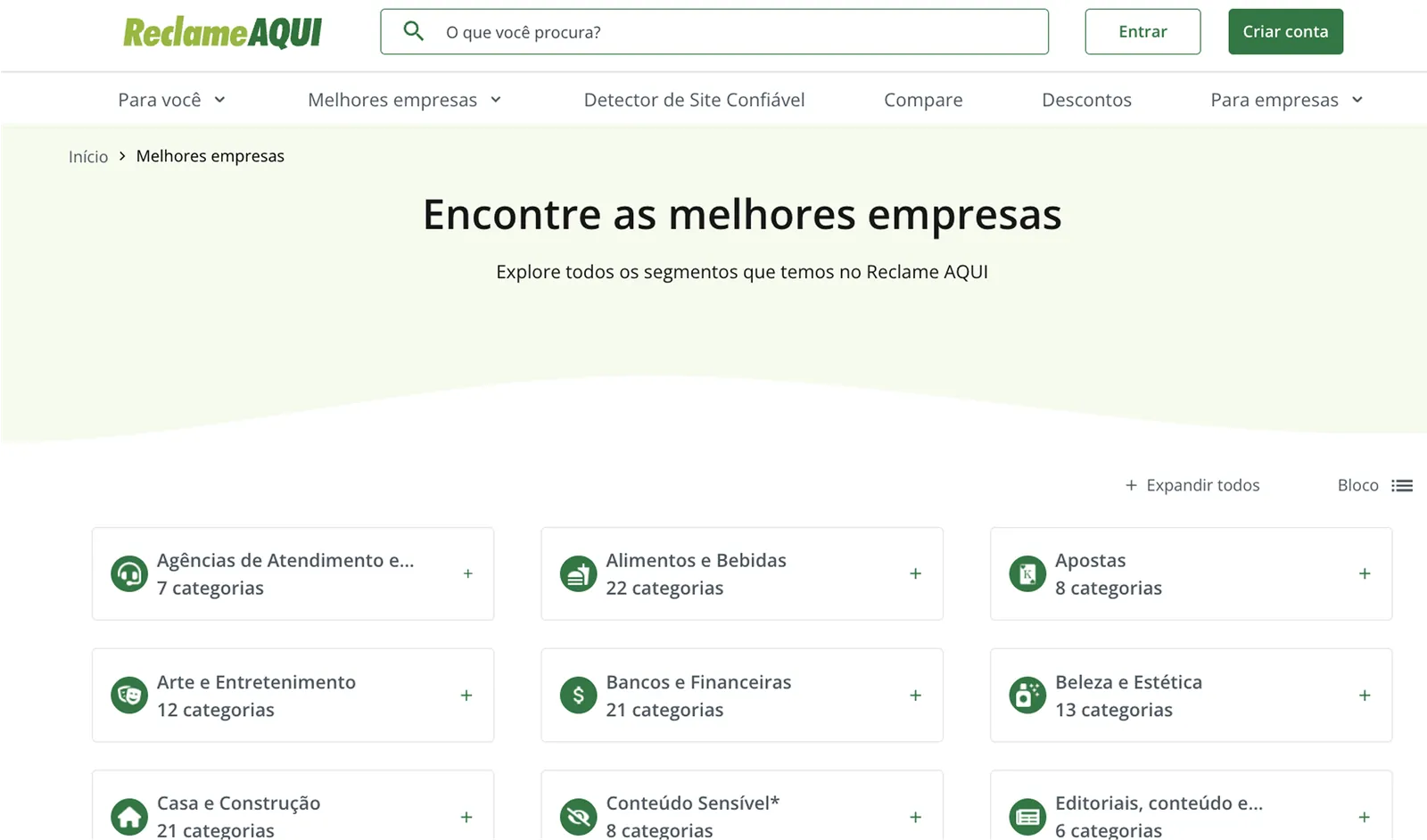
Reclame AQUI is the largest reputation platform in Latin America, with over 30 million monthly visits. Most people don't come to complain: they come to check whether a company is trustworthy before buying. I worked on the consumer side of monetization, covering coupons, AdSense, segment pages, the company comparison tool and the consumption data captured by the browser extension.
The B2B subscription for companies belonged to another team, and my interface with ad revenue was the inventory the B2C front generated.
02 - Challenge
Challenge
When I took over the front, the coupon and offers bet had already closed in the red. Confie AQUI, an offer comparison tool launched in 2020 to compete with Méliuz and Cuponomia, had accumulated a financial return of -R$2 million. It wasn't an open investment.
It was a consolidated loss, and the goal I inherited asked me to grow exactly there. On top of that, two inventory problems:
- 01
Ads placed with no page or position criteria, diluting the value of 30 million monthly visits.
- 02
CLS of 0.140 on desktop, rated POOR by Google, in media revenue that is sensitive to latency.
03 - Research
Research
We ran a quantitative study with 687 registered users, at 95% confidence and a 3.8% margin of error, complemented by a survey with 385 non-registered users. The result went straight against the current bet:
Coupons and promotions weigh 16% in purchase decisions, well below company reputation, product rating and price.
65% use the platform to research a company or brand, versus 44% for a product or service.
The perceived benefits are the complaint list (78%) and company reputation (72%).
Only 4% dropped the habit of checking before buying, and 39% visit several times a month.
Before the decision, three sources of a different nature: our own browsing and funnel data, which shows real behavior; demand mapping by the SEO team, which shows latent demand; and the survey, which shows declared intent. After the decision, two independent validations confirmed the reading: conversations with executives from 15 client companies, across CEO, CS, CX and marketing, and a brand study with more than 500 interviews.
04 - Decision
Decision
The conclusion was that the monetizable asset wasn't the discount, it was the audience at the moment of decision, qualified by category and intent. That's retail media. The front was redirected in four moves.
- 01
Segment pages with a template replicable by category, turning reputation-research traffic into inventory with category context.
- 02
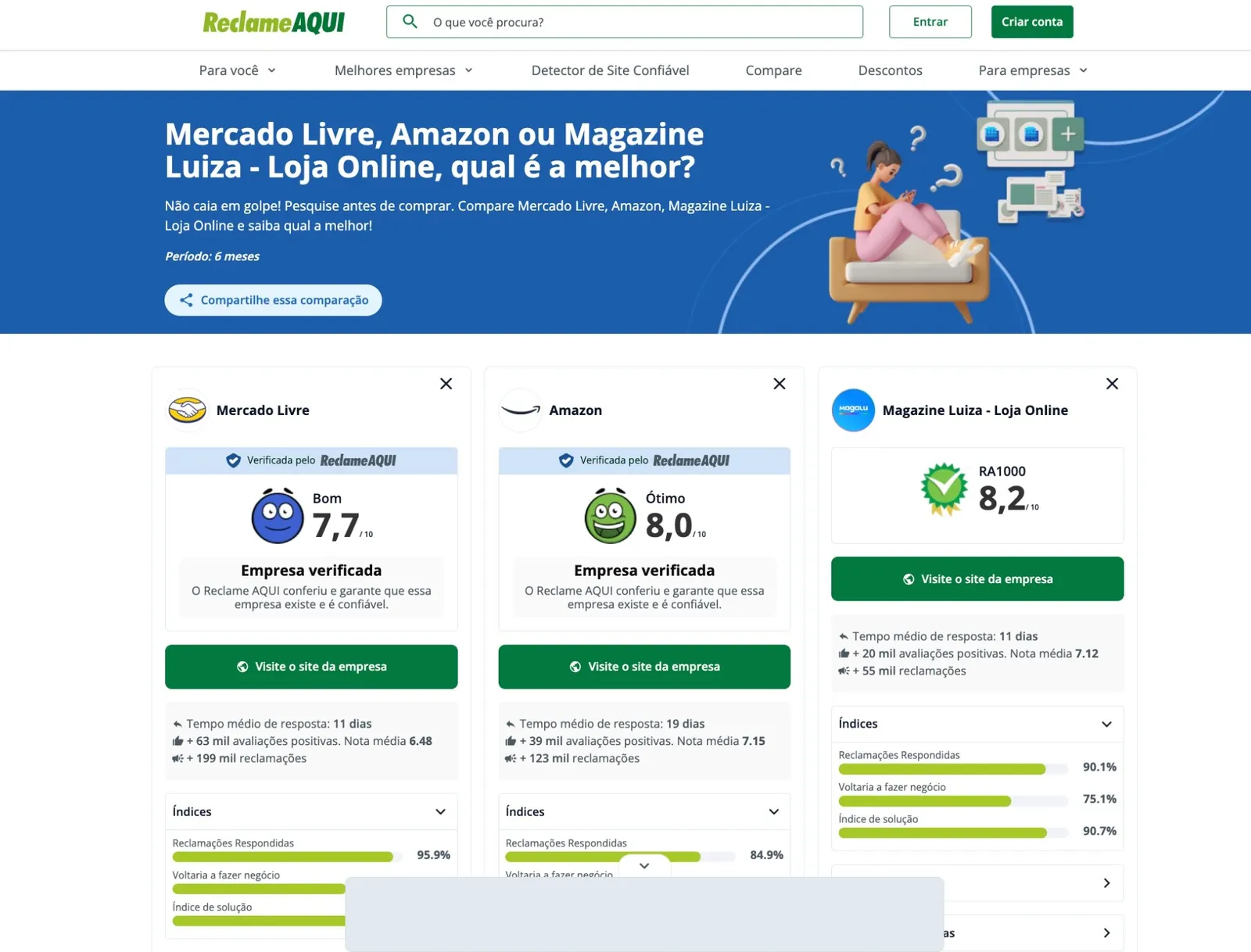
A company comparison tool, born from a research finding, capturing the exact moment of comparison before purchase.
- 03
Contextual ads within that surface, replacing generic placement with inventory carrying a purchase-intent signal.
- 04
Coupons repositioned as a consequence of the reputation check, not as the entry point. They stopped being the destination and became the next step for people who were already deciding.
In parallel, the extension started capturing consumption and search data at scale, giving a read on real purchase intent to prioritize segment categories, ad formats and offer placement.
05 - Impact
Impact
R$50K/month
in new recurring revenue in 2023 from the company comparison MVP
+71%
in Ads revenue, a result of the sales team working with the qualified inventory generated by the B2C front
R$500K
in AdSense revenue
R$300K
in coupon GMV
-60%
in ad load time, with the AdSense pattern rebuilt with CLS in mind
6% → 2.3%
churn in the shopping extension
+50%
in shopping extension downloads, from 200K to 300K
+200%
traffic to segment pages in about a year
06 - Screens
Screens
07 - Links